
Controlled Substance Disposal: What Healthcare Facilities Need to Get Right
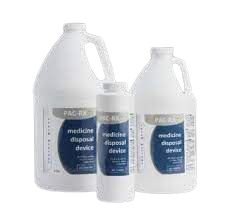
Controlled substances presents one of the most sensitive and highly regulated waste streams within healthcare environments. From hospitals and outpatient facilities to long-term care and pharmacies, proper controlled substance disposal is critical to maintaining compliance, preventing diversion, and protecting public safety.
Unlike standard pharmaceutical waste, controlled substances are regulated by the Drug Enforcement Administration (DEA) and require specific handling protocols. Facilities must ensure that controlled substances are securely stored, documented, and ultimately rendered non-retrievable prior to disposal. Understanding how to dispose of controlled substances properly is essential, as failure to follow these requirements can result in significant regulatory penalties and increased liability.
Understanding the Controlled Substances Act (CSA) and Its Impact on Disposal
A foundational component of compliant controlled substance disposal is understanding how substances are classified under federal law. According to the DEA’s Controlled Substances Act (CSA) overview, all regulated substances are categorized into five schedules based on their medical use, potential for abuse, and risk of dependence. These classifications directly impact how controlled substances must be handled, stored, and ultimately disposed of within healthcare environments.
The CSA also establishes a formal process for adding, removing, or reclassifying substances through regulatory action. As outlined by federal law, scheduling decisions are based on several critical factors, including:
- The substance’s potential for abuse
- Scientific evidence of its pharmacological effects
- Current scientific knowledge
- History and patterns of misuse
- Risks to public health
- Potential for psychological or physical dependence
To further clarify how substances are categorized, the DEA explains in its drug scheduling resource, that Schedule I substances have no accepted medical use and a high potential for abuse, while Schedule II–V substances have accepted medical uses with progressively lower abuse and dependence risks. This classification system plays a critical role in determining how different substances must be handled, stored, and managed throughout the controlled substance disposal process.
For healthcare providers, understanding these classifications is essential when determining proper handling protocols and ensuring compliant disposal of controlled substances. Facilities may also reference the DEA’s alphabetical listing of controlled substances to help identify regulated drugs within their inventory.
Controlled Substance Disposal vs. Typical Pharmaceutical Waste Management
A common challenge for healthcare facilities is ensuring that controlled substances are managed separately from other pharmaceutical waste streams. Mixing controlled substances with non-hazardous or hazardous pharmaceutical waste can create compliance issues and complicate disposal processes. Clear procedures, proper containerization, and staff training are essential to maintaining compliance with controlled substance disposal requirements.
For facilities looking to better understand how pharmaceutical waste is categorized, handled, and disposed of, it is important to take a broader view of waste streams beyond controlled substances. The EPA’s 10-Step Blueprint for Managing Pharmaceutical Waste in US Healthcare Facilities provides a practical framework to help organizations understand compliant waste management.
Incorporating these best practices can significantly improve how facilities approach both pharmaceutical waste and the disposal of controlled substances, ensuring safer, more consistent compliance across all waste streams.
Maintaining Chain of Custody in Controlled Substance Disposal
Another key consideration is chain of custody. Facilities must maintain accurate documentation from the point of generation through final disposal. This includes tracking waste, ensuring secure transport, and verifying that destruction methods meet DEA requirements. Working with a qualified service provider can help streamline this process and reduce administrative burden associated with controlled substance disposal.
To support consistent compliance, many organizations also invest in ongoing staff education. Access to structured compliance and training programs ensures employees understand handling protocols, documentation requirements, and evolving regulatory expectations related to controlled substances and the disposal of controlled substances.
Reducing Risk Through Proper Controlled Substance Disposal Programs
In addition to compliance, facilities are increasingly focused on reducing risk. Improper handling of controlled substances can lead to diversion, environmental impact, and reputational concerns. Implementing a structured and well-managed controlled substance disposal program helps mitigate these risks while ensuring operational consistency. Healthcare organizations across New Jersey, Pennsylvania, Delaware, Maryland, Washington, DC, and Virginia face similar regulatory pressures, but often operate under varying state-specific requirements. Managing these waste streams can be complex, but you don’t have to handle it alone—our comprehensive controlled substance and pharmaceutical management services can make compliance easier and more efficient.
A consistent, well-managed approach to controlled substance disposal helps ensure compliance across multiple locations while simplifying internal processes.
DEA Resources for Controlled Substance Disposal Compliance
For healthcare facilities operating across the Mid-Atlantic region, access to reliable regulatory guidance is essential. The DEA provides regional division offices that offer guidance to support controlled substance disposal compliance efforts.
Facilities can reference the appropriate regional DEA division for assistance:
- New Jersey
- Pennsylvania & Delaware (Philadelphia Division)
- Washington, DC, Virginia & Maryland (Washington Division)
Facilities can also visit the DEA Diversion Control Division website for more information on drug disposal.
Utilizing these resources can help facilities stay informed on enforcement priorities, regulatory updates, and best practices for the disposal of controlled substances.
Partnering with a Controlled Substance Disposal Company
Advant-Edge Solutions of Middle Atlantic, Inc. provides controlled substance disposal programs designed to align with DEA requirements while integrating seamlessly into existing waste management systems. Through secure handling, compliant destruction methods, and comprehensive tracking, ASMAI helps healthcare facilities maintain control, reduce risk, and ensure regulatory compliance across the Mid-Atlantic region.
Make your facility’s controlled substance disposal simple, safe, and stress-free—request a quote today and see how easy compliant waste management can be.