Reducing Risk and Waste: The Case for Reusable Sharps Containers
Healthcare facilities are continuously balancing safety, compliance, and cost—often while managing increasing regulatory pressure and operational demands. Sharps disposal sits at the center of all three. When not managed properly, it creates risk for staff, adds unnecessary volume to the regulated medical waste (RMW) stream, and drives avoidable costs.
According to the Centers for Disease Control and Prevention (CDC), approximately 385,000 needlestick and sharps-related injuries occur among hospital-based healthcare personnel each year in the United States. These incidents highlight the importance of stronger needlestick injury prevention strategies and more consistent sharps management practices throughout healthcare facilities.
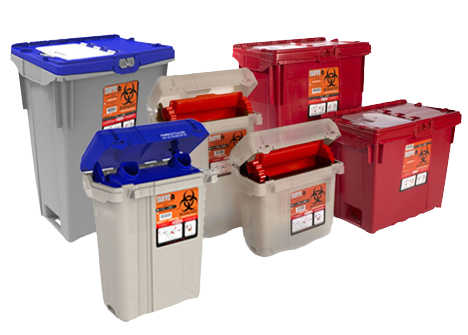
Reusable sharps container programs offer a more controlled, standardized approach that addresses each of these challenges while also supporting healthcare sustainability initiatives and long-term operational improvements.
Reducing Risk at the Point of Use
Sharps handling is one of the highest-risk activities within a healthcare setting. Overfilled containers, improper closures, and inconsistent practices can all lead to needlestick injuries and exposure incidents.
Reusable sharps systems are designed to reduce this variability. Containers are durable, puncture-resistant, and serviced on a defined schedule—typically exchanged before reaching full capacity. This proactive approach minimizes overfilling and supports needlestick injury prevention for healthcare workers.
Studies published in the International Journal of General Medicine have shown that sharps injuries are frequently underreported, making prevention and standardized handling procedures even more important within healthcare environments. Establishing consistent sharps handling protocols can help reduce avoidable risks and improve workplace safety.
Standardization across departments also plays a key role. When staff are working with the same container types and processes throughout a facility, adherence improves and the likelihood of errors decreases.
Strengthening Compliance Through Consistency
Compliance is driven by execution. Even well-designed programs can fall short if processes vary from one department to another.
Reusable sharps programs support a consistent approach to container use, handling, and exchange. This makes staff training more effective and reduces common compliance issues such as improper segregation, unsecured containers, or inconsistent practices.
The Occupational Safety and Health Administration (OSHA) identifies proper sharps containers as an important engineering control for reducing sharps injuries and minimizing exposure risks in healthcare settings. Standardized sharps programs help facilities support these safety objectives while improving healthcare operational efficiency and maintaining stronger compliance practices.
A standardized system also supports stronger documentation and oversight, helping facilities maintain a more controlled, audit-ready environment through education and clear procedures—not reactive corrections.
Reducing Regulated Medical Waste Volume
Traditional disposable sharps containers are treated as regulated medical waste after a single use, contributing significant weight and volume to the waste stream.
Reusable containers eliminate this inefficiency. Instead of being discarded, containers are collected, cleaned, and returned to service. This reduces the amount of plastic entering the RMW stream and lowers the total weight of waste requiring treatment.
For healthcare organizations focused on healthcare sustainability and environmentally responsible operations, reusable programs can provide a measurable environmental benefit in addition to operational improvements. Research published in PeerJ found that converting from disposable to reusable sharps containers reduced sharps waste stream greenhouse gas emissions by as much as 84% within a large healthcare system.
For facilities focused on waste reduction and sustainability initiatives, this represents a practical and measurable improvement.
Controlling Costs Through Waste Reduction and Efficiency
The financial impact of sharps programs extends beyond the cost of containers. Disposal costs are directly tied to the volume of regulated medical waste generated.
By reducing RMW volume, reusable sharps programs help lower overall disposal costs. Facilities also benefit from eliminating ongoing purchases of disposable containers and reducing labor associated with assembly, storage, and handling.
In addition, predictable service schedules reduce the likelihood of overflow situations, emergency pickups, and associated fees—creating a more stable and manageable cost structure. These improvements can also contribute to better healthcare operational efficiency by reducing disruptions and improving workflow consistency across departments.
A More Controlled Approach to Sharps Management
Reusable sharps container programs provide healthcare facilities with a more disciplined and efficient system for managing one of their highest-risk waste streams. By reducing variability, improving handling practices, and minimizing waste, these programs support safer operations, stronger compliance, healthcare sustainability, and better cost control.
Facilities looking to improve waste handling processes may also benefit from reviewing their sharps management provider to identify additional opportunities for safer and more efficient container management.
Looking to Improve Safety for Your Staff?
If you’re looking to reduce regulated medical waste, improve safety, support healthcare sustainability initiatives, or bring greater consistency to your sharps management program, it may be time to evaluate a reusable solution. Advant-Edge Solutions of Middle Atlantic can help review your current program and identify opportunities to improve performance across your facility.
Contact us today to learn how a reusable sharps container program can support safer, more efficient operations at your healthcare facility.