
This guide provides an overview of Virginia medical waste regulations, highlights key compliance requirements, and identifies important resources healthcare facilities can use to remain compliant.
Healthcare facilities across Virginia generate a wide range of waste streams every day, including regulated medical waste, sharps, pathological waste, pharmaceutical waste, and hazardous waste. Proper management of these materials is essential not only for protecting patients, employees, and the public, but also for maintaining compliance with state and federal laws. Failure to follow Virginia medical waste regulations can result in regulatory penalties, workplace injuries, environmental contamination, and increased liability for healthcare organizations.
Virginia has established comprehensive requirements governing the handling, packaging, storage, transportation, treatment, and disposal of regulated medical waste (RMW). These rules are administered primarily by the Virginia Department of Environmental Quality (DEQ) through the Regulated Medical Waste Management Regulations (9VAC20-121). Healthcare facilities must also comply with federal requirements from agencies such as OSHA, DOT, EPA, CDC, FDA, and DEA. Understanding how these requirements apply to each waste stream is critical to maintaining a safe and compliant healthcare waste program.
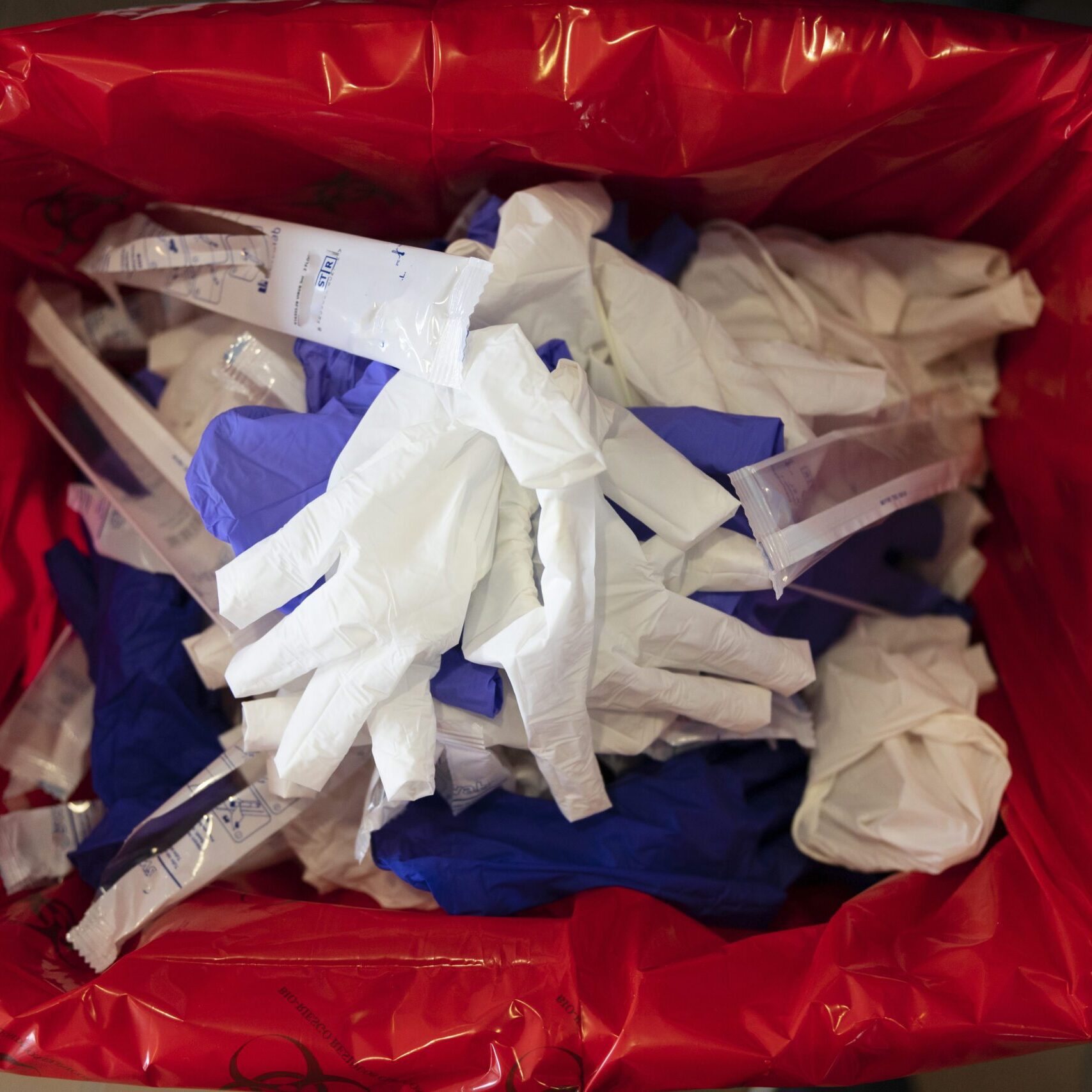
What Is Regulated Medical Waste in Virginia?
Virginia defines regulated medical waste as specific categories of waste capable of transmitting disease or creating health risks if improperly managed. Under the Virginia Regulated Medical Waste Management Regulations (9VAC20-121), regulated medical waste includes items such as:
- Sharps, including needles, syringes, lancets, and scalpels
- Human blood and blood products
- Pathological waste and anatomical material
- Cultures and stocks of infectious agents
- Certain laboratory wastes
- Items contaminated with potentially infectious materials
- Other wastes identified by Virginia regulations as requiring special handling
The Virginia DEQ requires generators to properly identify and segregate regulated medical waste from other waste streams as soon as it is generated.
See the Virginia DEQ Regulated Medical Waste page for more information.
Key Virginia Medical Waste Regulations
Virginia's medical waste requirements focus on safe management throughout the entire waste lifecycle—from generation through final treatment and disposal.
View the Virginia Regulated Medical Waste Management Regulations (9VAC20-121) for the established rules and standards. More information can be found at the VA DEQ Medical Waste Page and in the Virginia DEQ Compliance Assistance Document for Regulated Medical Waste Generators.
Waste Segregation and Identification
Generators must identify regulated medical waste at the point of generation and separate it from ordinary trash whenever practical. Proper segregation reduces risk, improves safety, and helps ensure waste receives the correct treatment and disposal.
Virginia DEQ guidance also encourages facilities to segregate waste based on anticipated treatment methods whenever possible.
Packaging and Labeling Requirements
Virginia regulations place significant responsibility on generators to package and label regulated medical waste correctly before storage or transportation.
Key requirements include:
- Red bags are generally used for regulated medical waste. These liners must pass the impact and tear resistance tests described in ASTM D1709 (Dart Drop) and ASTM D1922 (Propagated Tear Resistance).
- Sharps must be placed directly into puncture-resistant containers.
- Containers must be sealed to prevent leaks, spills, or protrusion of waste.
- Packages must display appropriate biohazard labeling.
- Labels must include generator information.
- Regulated medical waste packaging must comply with applicable transportation requirements before shipment.
Sharps containers should remain closed once sealed and should not be reopened or repackaged unless specifically authorized under applicable requirements.
Storage Requirements
Virginia requires regulated medical waste to be stored in a manner that maintains package integrity and prevents unauthorized access.
Storage areas should:
- Keep waste containers upright and secure
- Remain clean and orderly
- Restrict access to authorized personnel
- Protect workers and the public
- Prevent leakage, spills, or contamination
Waste stored in loading areas must generally be prepared for transportation and may not remain in those areas for extended periods.
Transportation Requirements
Regulated medical waste transported offsite must comply with Virginia and federal transportation requirements.
Virginia regulations require:
- Proper packaging and labeling before shipment
- Use of shipping papers and transportation documentation
- Transport in accordance with applicable DOT hazardous materials requirements
- Safe management practices to prevent releases during transport
Treatment and Disposal
Untreated regulated medical waste cannot be disposed of in a solid waste landfill. Waste must first undergo an approved treatment process such as:
- Steam sterilization
- Incineration
- Approved alternative treatment technologies
Virginia requires treatment facilities to meet detailed performance standards and permitting requirements before waste can be considered safe for disposal.
How Often Does Medical Waste Need to Be Picked Up in Virginia?
Small Generators: Less Than 250 Gallons of RMW Per Calendar Month
Large Generators: 250 Gallons or More of RMW Per Calendar Month
Virginia Medical Waste Storage and Pickup Requirements at a Glance
| Less than 250 gallons | At least once per calendar month | 45 calendar days |
| 250 gallons or more | At least once per calendar week | 10 calendar days |
Sharps Disposal Requirements in Virginia
Sharps represent one of the highest-risk waste streams generated by healthcare facilities due to the potential for needlestick injuries and exposure to bloodborne pathogens.
Virginia DEQ guidance requires regulated medical waste sharps to:
- Be placed immediately into puncture-resistant containers
- Be properly labeled as regulated medical waste
- Remain secured and sealed during storage and transportation
- Be treated at approved facilities before disposal
Virginia specifically prohibits placing loose sharps in trash containers, recycling containers, or other improper disposal locations.
Healthcare facilities should establish clear sharps handling procedures and employee training programs to reduce exposure risks.
See more details in the Virginia DEQ Division of Land Protection and Revitalization Guidance Memo No. 2016-01.
Hazardous and Pharmaceutical Waste Considerations
Some healthcare waste streams may be regulated as hazardous waste in addition to medical waste.
Examples include:
- Certain chemotherapy wastes
- Laboratory chemicals
- Solvents and reagents
- Hazardous pharmaceutical waste
- Mercury-containing materials
Facilities generating hazardous waste must comply with the Virginia Hazardous Waste Management Regulations as well as applicable EPA requirements.
Healthcare organizations should evaluate pharmaceutical waste carefully, particularly when controlled substances or EPA-regulated hazardous pharmaceuticals are involved.
Learn more by visiting the Virginia DEQ Hazardous Waste Page.
Federal Regulations That Apply
Virginia healthcare facilities must also comply with several federal agencies that oversee workplace safety, transportation, pharmaceuticals, and waste management.
- OSHA – Enforces workplace safety standards, including the Bloodborne Pathogens Standard (29 CFR 1910.1030), which requires measures to minimize employee exposure to potentially infectious materials. See OSHA Hospitals Waste Management Overview.
- DOT / PHMSA – Governs the packaging, labeling, classification, and transportation of regulated medical waste and infectious substances under the Hazardous Materials Regulations. See DOT Infectious Substances Overview and Packaging Requirements (49 CFR 173.197).
- EPA – Oversees hazardous waste management through the Resource Conservation and Recovery Act (RCRA) and provides guidance for healthcare facilities managing certain medical and hazardous waste streams. See EPA Medical Waste page.
- CDC – Offers recommendations and best practices for the safe handling, storage, treatment, and containment of regulated medical waste in healthcare settings. See CDC Medical Waste Guidelines.
- FDA – Provides regulatory oversight for reusable sharps disposal containers and other medical devices used to safely manage sharps waste. See FDA Sharps Disposal in Healthcare Facilities.
- DEA – Establishes requirements for the disposal and destruction of controlled substances and certain pharmaceutical wastes generated by healthcare facilities. See DEA Drug Disposal Information.
The Risks of Non-Compliance
Medical waste regulations exist to protect healthcare workers, patients, waste handlers, and the environment. When regulated medical waste is improperly managed, the consequences can be significant.
Potential risks include:
- Needlestick injuries and employee exposure incidents
- Release of infectious materials into the environment
- State and federal enforcement actions
- Costly penalties and corrective actions
- Transportation violations and shipment delays
- Increased liability and reputational damage
- Public health concerns resulting from improper treatment or disposal
Even seemingly minor violations—such as improper labeling, incomplete documentation, or incorrect storage practices—can create compliance issues during inspections. Developing a comprehensive waste management and training program helps reduce risk while demonstrating a commitment to safety and regulatory compliance.
Partnering with an experienced medical waste provider can help facilities navigate these requirements and maintain confidence that waste is being managed properly.
Medical waste regulations exist to protect healthcare workers, patients, waste handlers, and the environment. When regulated medical waste is improperly managed, the consequences can be significant.
Potential risks include:
- Needlestick injuries and employee exposure incidents
- Release of infectious materials into the environment
- State and federal enforcement actions
- Costly penalties and corrective actions
- Transportation violations and shipment delays
- Increased liability and reputational damage
- Public health concerns resulting from improper treatment or disposal
Even seemingly minor violations—such as improper labeling, incomplete documentation, or incorrect storage practices—can create compliance issues during inspections. Developing a comprehensive waste management and training program helps reduce risk while demonstrating a commitment to safety and regulatory compliance.
Partnering with an experienced medical waste provider can help facilities navigate these requirements and maintain confidence that waste is being managed properly.
How ASMAI Helps Virginia Healthcare Facilities Stay Compliant
Keeping up with Virginia medical waste regulations can be challenging for healthcare organizations already focused on patient care. Regulations change, documentation requirements evolve, and employee training must remain current.
Advant-EDGE Solutions of Middle Atlantic, Inc. (ASMAI) helps healthcare facilities throughout Virginia simplify compliance while ensuring regulated waste is managed safely and efficiently.
ASMAI provides:
- Medical Waste Disposal Services
- Sharps Disposal Services
- Reusable Sharps Container Programs
- Pharmaceutical Waste Management
- Compliance & Training Programs
Beyond waste collection and disposal, ASMAI offers comprehensive compliance support designed specifically for healthcare facilities. Our compliance programs include more than 70 facility audits, OSHA and DOT training, Bloodborne Pathogens training, HIPAA education, regulatory guidance, and online access to manifests, training records, and compliance documentation.
By working with ASMAI, facilities gain a partner that understands both operational needs and regulatory obligations. Our team helps clients reduce risk, improve safety, maintain documentation, and stay ahead of evolving Virginia medical waste regulations.
If your facility needs assistance with regulated medical waste disposal, sharps management, pharmaceutical waste, or compliance training, contact ASMAI today to learn how we can support your compliance goals.
This information is provided for general educational purposes and is not intended as legal or regulatory advice. Facilities should consult the current Virginia DEQ regulations and guidance regarding their specific circumstances.
Ready to protect your staff and stay ahead of Virginia medical waste regulations? Request a quote and get started with our compliance solutions.