This guide provides an overview of Maryland medical waste regulations and highlights key resources healthcare organizations should review when developing or maintaining a compliant waste management program.
Healthcare organizations across Maryland generate a wide variety of waste streams every day, from used sharps and blood-soaked materials to laboratory specimens, pharmaceutical waste, and hazardous chemicals. Properly managing these materials is not only essential for protecting employees, patients, waste handlers, and the environment—it is also required by state and federal law. It’s crucial to understand Maryland medical waste regulations.
Maryland has established a comprehensive regulatory framework governing what the state calls Special Medical Waste, which is often referred to as regulated medical waste, infectious waste, or biohazardous waste. These requirements are administered by multiple agencies, including the Maryland Department of Health (MDH) and the Maryland Department of the Environment (MDE). Healthcare facilities must also comply with federal requirements issued by OSHA, DOT, EPA, CDC, FDA, and, in some cases, the DEA.
Failure to follow Maryland medical waste regulations can lead to enforcement actions, monetary penalties, transportation violations, employee injuries, environmental contamination, and increased liability exposure. Understanding the rules that apply to your facility is critical for maintaining compliance and reducing risk.
What Is Considered Medical Waste in Maryland?
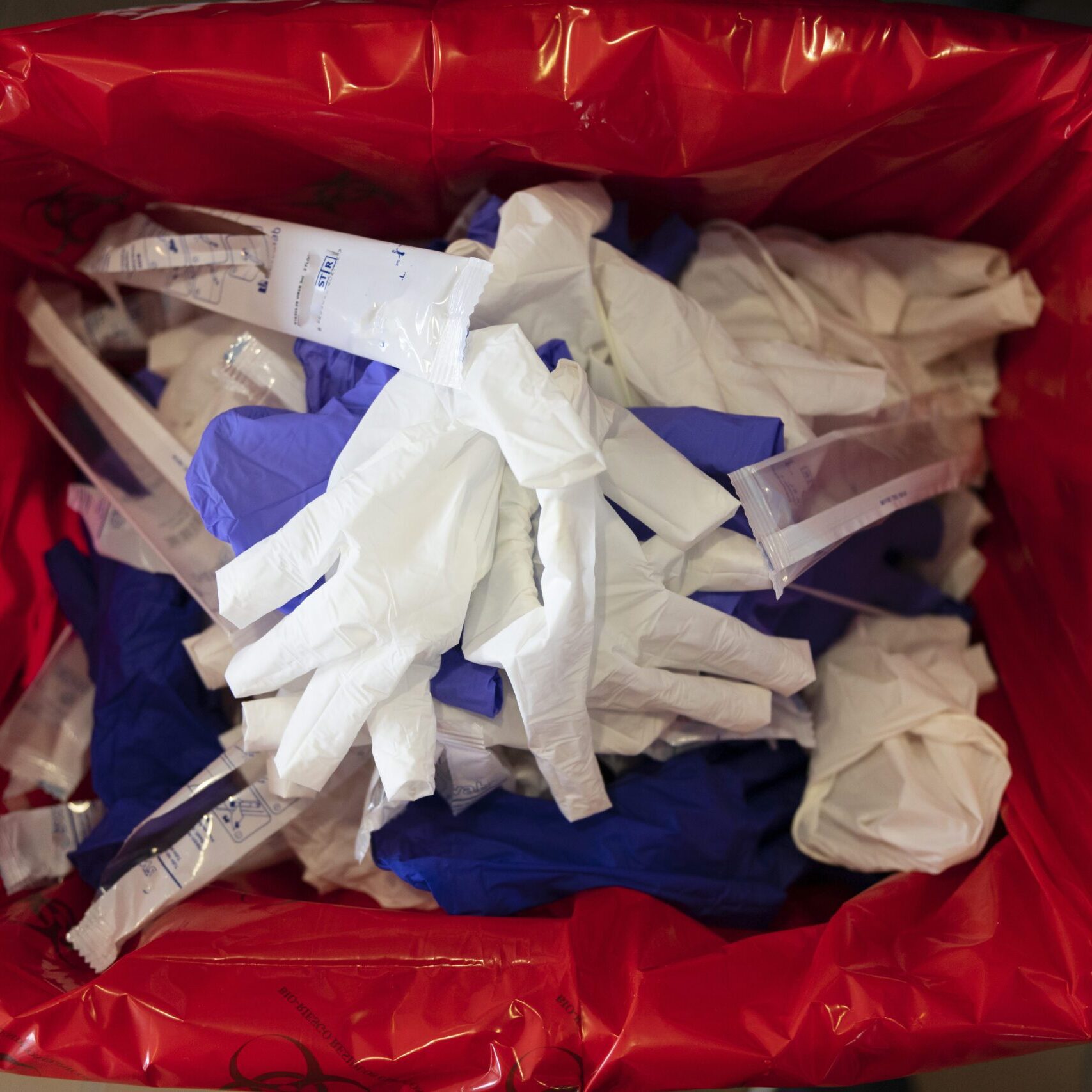
Maryland regulations classify infectious healthcare waste as Special Medical Waste.
According to COMAR 26.13.11, Special Medical Waste includes:
- Human or animal tissues and organs
- Blood and blood products in liquid or semi-liquid form
- Items saturated with blood or other potentially infectious materials
- Microbiological laboratory cultures and stocks
- Infectious substances capable of causing disease
- Pathological waste
- Sharps such as needles, syringes, scalpels, and contaminated broken glass
- Certain contaminated materials generated during patient care and laboratory activities
Maryland law also establishes specific exclusions and exemptions for certain waste streams and small-volume generators under defined circumstances.
Key Maryland Medical Waste Regulations
While healthcare facilities should review the full regulatory text, some of the most important requirements include:
Medical Waste Determinations
Every generator is responsible for determining whether a waste qualifies as Special Medical Waste under Maryland regulations.
Facilities must evaluate waste streams using the definitions established in COMAR 26.13.11 and applicable exclusions.
See COMAR 26.13.12 for more details.
Generator Identification Numbers
Generators may not transport, store, treat, dispose of, or offer Special Medical Waste for transportation without first obtaining a Maryland identification number.
Healthcare facilities must also ensure waste is transferred only to authorized transporters possessing the appropriate identification credentials.
See COMAR 26.13.12 for more details.
Packaging, Marking, and Labeling Requirements
Before waste leaves a facility, generators must properly:
- Classify the waste
- Package materials according to DOT standards
- Apply required markings
- Use appropriate shipping labels
- Prepare shipping documentation
These requirements help ensure waste remains secure during transportation and can be properly identified by transporters and emergency responders.
See COMAR 26.13.12 for more details.
Transportation Requirements
Maryland requires Special Medical Waste to be transported in suitable containers that prevent releases into the environment.
Additional transportation requirements include:
- Proper container labeling
- Completed shipping papers
- Safe loading and unloading procedures
- Certified transport vehicles
- Immediate spill reporting
- Availability of emergency response information
View the MDE Guidelines for Transportation of Special Medical Wastes for additional information.
Recordkeeping and Reporting
Healthcare facilities must maintain documentation supporting waste determinations, reports, and compliance activities.
Many records must be retained for at least three years and may need to be provided during inspections or investigations.
See COMAR 26.13.12 for more details.
Pharmaceutical Waste Regulations in Maryland
Healthcare organizations must pay particular attention to pharmaceutical waste compliance.
Maryland recently updated its hazardous waste pharmaceutical requirements to align with EPA's Hazardous Waste Pharmaceuticals Rule under the EPA 40 CFR Part 266 Subpart P.
Key provisions include:
- Prohibition on sewering certain hazardous waste pharmaceuticals
- Requirements for managing non-creditable hazardous pharmaceuticals
- Reverse distribution procedures for potentially creditable pharmaceuticals
- Container management standards
- Pharmaceutical waste accumulation requirements
- Recordkeeping obligations
These requirements affect hospitals, pharmacies, physician offices, long-term care facilities, and other healthcare providers that handle pharmaceutical waste.
Check out the Maryland Pharmaceutical Waste Compliance Guide for more information.
Federal Regulations That Also Apply
Maryland healthcare facilities must comply with numerous federal requirements in addition to state regulations:
- OSHA – Enforces workplace safety standards, including the Bloodborne Pathogens Standard, exposure control plans, PPE requirements, and sharps injury prevention measures (29 CFR 1910.1030). See the OSHA Hospitals Waste Management overview.
- DOT / PHMSA – Regulates the packaging, labeling, documentation, and transportation of regulated medical waste and infectious substances. See the DOT Infectious Substances Overview and 49 CFR 173.197 packaging requirements.
- EPA – Oversees hazardous waste management under the Resource Conservation and Recovery Act (RCRA), including requirements that may apply to healthcare-generated hazardous and pharmaceutical wastes. See the EPA Medical Waste Resources page.
- CDC – Provides recommendations and best practices for the safe handling, storage, treatment, and disposal of potentially infectious healthcare waste. See the CDC Medical Waste Guidelines.
- FDA – Regulates sharps disposal containers used in healthcare settings and provides guidance for safe sharps management. See FDA Sharps Disposal in Healthcare Facilities.
- DEA – Establishes requirements for the disposal of controlled substances and certain pharmaceutical wastes. See DEA Drug Disposal Information.
The Risks of Non-Compliance
Medical waste regulations exist for an important reason. Improper handling of sharps, infectious waste, hazardous pharmaceuticals, and laboratory materials can expose employees, patients, transporters, and the public to serious health and safety risks.
Organizations that fail to comply with Maryland medical waste regulations may face:
- State and federal enforcement actions
- Significant financial penalties
- Transportation violations
- Increased risk of needlestick injuries
- Exposure to bloodborne pathogens
- Environmental contamination
- Hazardous waste violations
- Reputational damage
- Increased liability following workplace incidents
A strong compliance program helps reduce these risks while demonstrating a commitment to patient safety, employee protection, and environmental stewardship.
How ASMAI Helps Maryland Healthcare Facilities Stay Compliant
Managing medical waste compliance can be challenging, especially as regulations continue to evolve. Healthcare facilities must navigate state requirements, federal regulations, employee training obligations, documentation requirements, transportation standards, and pharmaceutical waste rules.
Advant-EDGE Solutions of Middle Atlantic, Inc. (ASMAI) helps healthcare organizations throughout Maryland simplify compliance while maintaining safe and efficient waste management programs.
ASMAI’s Healthcare Waste Services
We offer disposal and pickup solutions for healthcare facilities and other organizations with biohazardous waste. Find out more by clicking the links below.
Beyond Waste Removal
ASMAI's compliance-focused approach extends well beyond collection and disposal.
Our programs help facilities strengthen compliance through:
- OSHA training programs
- DOT training programs
- Bloodborne Pathogens training
- HIPAA training
- Facility audits
- Regulatory guidance
- Documentation support
- Online access to manifests and service records
- Ongoing compliance assistance
With more than 70 compliance audit points evaluated across healthcare facilities, ASMAI helps organizations identify vulnerabilities before they become costly compliance issues.
Whether you operate a physician office, surgery center, dental practice, laboratory, pharmacy, or veterinary clinic, our team can help create a waste management program aligned with Maryland medical waste regulations and industry best practices.
This information is provided for general educational purposes and is not intended as legal or regulatory advice. Facilities should consult the current state and federal regulations and guidance regarding their specific circumstances.
Ready to protect your staff and stay ahead of Maryland medical waste regulations? Request a quote and get started with our compliance solutions.